
It's never been more important for CEOs and CIOs to put money into high-tech surveillance cameras. However, many businesses are having difficulty taking a preventative stance on monitoring at the convergence of physical and cyber security. Despite the fact that many businesses have made substantial investments in surveillance technology—oftentimes costly DVR-based or NVR-based systems—they have not been able to adequately protect their property and customers.
IT and security experts frequently have difficulty in beginning their search because they are unsure of which characteristics are essential. When considering a brandnew security camera system, it is easy to zero in on what is most important by giving priority to industry-specific requirements and seeking solutions that reduce existing bottlenecks inside the business.
We've compiled a list of essential features for workplace security cameras to aid you along the way.
Plug-and-Play Setup
Many security customers still prioritise installation simplicity because it is the initial challenge they must surmount when setting up a new surveillance system.
Easy installation is guaranteed by using plug-and-play cameras. Numerous commercially available options for securing a building can be powered and connected with a single Power over Ethernet (PoE) cable. Because Ethernet wiring already exists in most workplaces and corporations, this is a popular option for those wishing to rapidly expand their network's reach.
The procedure of locating free space on the storage device adds a further layer of complexity to setting up a system with cameras that use local recorders (such NVRs or DVRs). Cloud-based security cameras that have their own storage offer not only the dual benefits of local and cloud-based backup, but also the simplicity of a plug-and-play setup.
Centralized Management
In spite of the fact that IT and security experts have spent the better part of the past decade dealing with disparate surveillance systems that cannot be accessed through a single login, centralising video into a single system has become an organisational mandate.
Technology experts now demand their video monitoring systems to be just as user-friendly as other cutting-edge programmes (VMS). To achieve the goal of unified surveillance ownership, a convenient method of monitoring video surveillance at each location is required.
Stakeholders in the system can see the big picture because surveillance is managed on a single platform. Organizations should preserve audit logs to provide admins with total visibility into the utilisation of their systems for regulation, control activities, or merely peace of mind.
Safety Features Included
Most CEOs who are considering an upgrade to their security camera systems have cybersecurity on their minds as well as the ability to monitor and protect against any threats to the physical facility. Teams gain peace of mind knowing their cameras and recordings are protected from prying eyes and hackers thanks to built-in security measures like single-sign on or two-factor authentication.
Keep in mind that even while conventional NVR/DVR surveillance camera systems are promoted as risk-free, closed-circuit solutions, this assurance is nullified the moment they are linked to the wider internet. Your system could be vulnerable to the biggest network threats if you need to break through firewalls and open ports to allow remote access.
Consequently, it is crucial to ensure that all potential solutions use cutting-edge security measures, such as two-factor authentication and the most up-to-date encryption standards to safeguard user privacy, to keep your data safe.
Safe, Distant Viewing of Cameras
Although there are a number of systems that allow for remote access, the more standard option of watching films away from the office usually necessitates users to expose themselves to security risks by opening ports. Any IT manager in need of a surveillance camera system intended for the modern organization must have remote access that doesn't require opening ports.
The capacity to easily share live video feeds or archival footage with team members, essential partners, or even relevant councils in the event of an emergency builds on the necessity for remote access. When time is of the essence, neither the sender nor the receiver of shared footage should have to go through unnecessary hoops to view it.
Alerts and Smart Features
When assisted by computer vision, features like people and car identification help teams keep tabs on the situation without constantly monitoring cameras. The likelihood of events occuring on-site is greatly diminished or eradicated when stakeholders are immediately notified of suspicious activity, like a person being identified at the gate of a college after hours.
Security professionals may rest easy knowing their surveillance systems are constantly active thanks to other system warnings like tamper or camera downtime notifications. When security camera audits are automated across several sites, teams may redistribute their time, money, and attention to other areas of the business.
Video Storage
When shopping for home security cameras, it might be tempting to choose models based on the level of technology they claim to possess. But keep in mind that the cost of storage for all the information captured by your high-tech cameras is substantial.
Ultra-high-definition films, along with colourized night mode and wide viewing angles, can quickly rack up exorbitant storage charges. For some who would rather not completely empty their bank accounts on storage, this can be a deal breaker.
Please proceed with caution. Consider how much time you actually plan to spend reviewing your footage. Is continuous monitoring absolutely necessary, or would a motion-activated camera that records short clips suffice?
As one might expect, the latter arrangement is less expensive. If your camera doesn't have to record every single thing, your video storage costs will go down. Around $10 or less each month is our best estimate. We cannot stress this point enough: monthly expenses (such a cloud subscription) should be factored in when calculating the total cost of your security cameras, as they will quickly add up as you work to secure your house.
Selecting a well-known manufacturer like Samsung could assist guarantee that you receive exactly what you expect. While we were first unhappy to find that Samsung had stopped their SmartCloud storage service, we quickly got used to using the micro SD card that was installed in the camera. Saving money on a cheap machine was possible because to local storage.
Choosing the less expensive, on-premises option for storing your data may come with some sacrifices, though. Mainly, you won't have any backup footage if something happens to your local storage device, like it getting lost, stolen, or corrupted. This is why, if at all possible, you should invest in both personal and cloud storage. Access your recordings from any internet-connected device, anytime, and from any location, thanks to cloud storage.
Adaptable Video Resolution
As you begin to compare different security cameras, you will notice that the vast majority of them boast 1080p video resolution. But this can also be deceiving in its own way. In reality, many cameras can only achieve 1080p under ideal conditions, such as when the Wi-Fi signal is strong.
However, even with the best-of-the-best brands, we weren't always able to achieve the 1080p resolution we were looking for due to our spotty Wi-Fi. Our visual quality occasionally dipped into the grainy range.
But it's possible that we're paying too much attention to this detail. Given that quality is among the most sought-after features of a security camera, we experts always give it special consideration when writing our reviews.
The 720p resolution is still very high quality.
In other words, the resolution isn't the sole aspect determining the quality of a security camera's footage. The frame rate and HDR support of the camera are two examples (HDR).
That's why it's ideal to invest in a camera that allows you to freely adjust the quality and video settings. Google's Nest Cams generally perform quite well in this respect. They support HDR and can go up to 1080p, although they scale down to fit your connection speed if necessary. Furthermore, they record crisp video right when it counts, guaranteeing that you won't miss a single crucial moment.
Night Vision
An image intensifier is a device used in low-light cameras to increase the amount of visible light captured by the sensor, allowing for a clearer image of the subject. There are drawbacks to this technology, which is also employed in night-vision goggles.
That is to say, if there is no ambient light, the light-amplification camera will be unable to make any observations. When trying to improve a camera's effectiveness at night without attracting a lot of attention to itself, many that employ this technology can emit near-infrared energy.
However, thermal imaging works in an entirely different fashion. It may operate on heat alone, rather than the more common requirement of light. Thermal imaging sensors pick up on subtle shifts in thermal or infrared energy (heat) and show them as a range of colours. While thermal imaging sensors are capable of operating in total darkness, they do so at the expense of fine detail and colour.
Which Functions Should a Security Camera Have?
The first step in setting up a home security camera is deciding whether you want it to record continuously or only in response to predetermined events, such as motion. You won't miss a thing if you record in real-time, but doing so will eat up your Wi-Fi connection and isn't practical for wireless cameras that run on batteries. Recordings must be kept for a certain time, either on the device or on a remote server.
The camera should notify your mobile device when motion is detected and promptly send high-definition video of the incident. A high-quality camera need not be an expensive one; anything that can capture 1080p HD video will do. There are models capable of recording at 4 and 5 megapixels; beyond that, we're discussing about 4K resolution. Whether or not you want to focus in on the camera and read a licence plate, for example, is an example of the kind of granularity that can be achieved.
The security camera's power source is also an important consideration. A wireless camera should either run on batteries or be AC-powered, meaning it can be plugged into a power outlet. It's ideal to have access to AC power when setting up a camera, but that's not always possible. As a result, having access to both expands placement options.
What Are Security Camera Advantages?
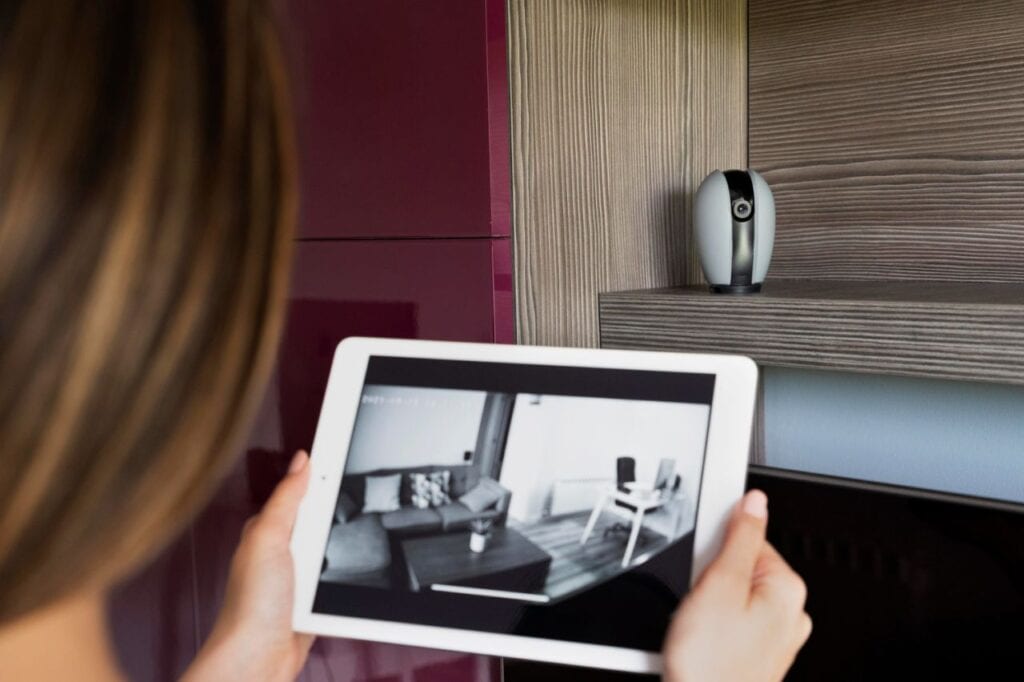
In either case, security cameras, wired or wireless, can provide invaluable peace of mind. You can monitor what's happening at home on your computer or smartphone in real time and receive alerts if anything out of the ordinary happens, making them a useful addition to your home security system.
An effective security camera system serves dual purposes as a deterrence and evidence retrieval mechanism. The presence of obvious surveillance cameras deters would-be burglars. Security cameras also aid in the gathering of evidence in the event of a crime. If something bad happens, like vandalism or a break-in, and it's caught on camera, you have a better chance of fixing it.
Super or ultra-high-resolution video is worth the investment if you wish to recognise vehicles, humans, and other moving things (2K or 4K). Because of the increased resolution afforded by this technology, facial features and licence plates can now be read with greater clarity. There is no way to get such sharpness with an HD or full HD camera, especially not at night.
Security cameras are most effective in deterring would-be intruders and guarding private property when they are part of a comprehensive home security system. As a power saving measure, motion detection is the only trigger for recording on wireless security cameras, therefore they may miss important events. When a touch sensor, glass-break sensor, or motion detector is activated, the security system's cameras can be programmed to begin recording automatically. This improves the odds that the cameras will capture any activity occuring on your property, rather than just the brief moments when something was moving in front of the lens.
Conclusion
At the intersection of physical and cyber security, many companies are struggling to adopt a proactive monitoring stance. When looking for a surveillance camera system, many IT and security professionals struggle to get started because they aren't sure what features are most important. To help, we've compiled this handy checklist of must-haves for any office surveillance cameras.
Companies should keep audit logs to give admins complete visibility into how their systems are used, whether for compliance purposes, to control activities, or just for peace of mind. Built-in safety features, such as single sign-on or two-factor authentication, keep hackers and snoops from accessing cameras and recordings.
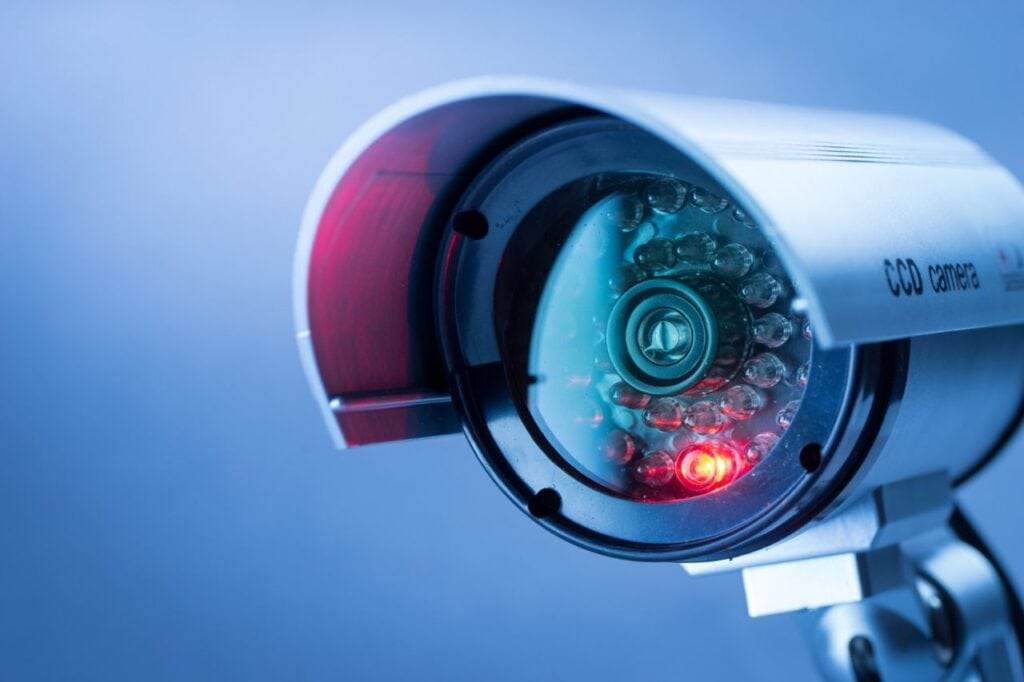
In the event of an emergency, security personnel must be able to quickly and easily distribute recordings and live feeds to other members of the team, vital partners, and even councils. All that data your high-tech cameras are capturing comes at a hefty price for storage. If you want to know how much your security cameras will actually cost, you need to include the ongoing monthly costs. The majority of surveillance cameras claim to have 1080p video resolution, but this can be misleading. If you go with a trusted brand like Samsung, you can probably expect to get exactly what you want.
Content Summary
- Cloud-based security cameras that have their own storage offer not only the dual benefits of local and cloud-based backup, but also the simplicity of a plug-and-play setup.
- Stakeholders in the system can see the big picture because surveillance is managed on a single platform.
- Keep in mind that even while conventional NVR/DVR surveillance camera systems are promoted as risk-free, closed-circuit solutions, this assurance is nullified the moment they are linked to the wider internet.
- Your system could be vulnerable to the biggest network threats if you need to break through firewalls and open ports to allow remote access.
- Consequently, it is crucial to ensure that all potential solutions use cutting-edge security measures, such as two-factor authentication and the most up-to-date encryption standards to safeguard user privacy, to keep your data safe.
- Any IT manager in need of a surveillance camera system intended for the modern organization must have remote access that doesn't require opening ports.
- The capacity to easily share live video feeds or archival footage with team members, essential partners, or even relevant councils in the event of an emergency builds on the necessity for remote access.
- But keep in mind that the cost of storage for all the information captured by your high-tech cameras is substantial.
- Consider how much time you actually plan to spend reviewing your footage.
- If your camera doesn't have to record every single thing, your video storage costs will go down.
- Saving money on a cheap machine was possible because of local storage.
- Choosing the less expensive, on-premises option for storing your data may come with some sacrifices, though.
- This is why, if at all possible, you should invest in both personal and cloud storage.
- Access your recordings from any internet-connected device, anytime, and from any location, thanks to cloud storage.
- The 720p resolution is still very high quality.
- In other words, the resolution isn't the sole aspect determining the quality of a security camera's footage.
- The frame rate and HDR support of the camera are two examples (HDR).
- That's why it's ideal to invest in a camera that allows you to freely adjust the quality and video settings.
- When making a purchase, it's also crucial to think about the desired field of view, or how much of a scene you want your camera to capture.
- On the other hand, if you need to keep an eye on a huge area, a wider-angle lens is what you'll need.
- However, the footage from surveillance cameras with a larger field of view is often distorted due to the "fish-eye" effect.
FAQs About Security Camera
Do security cameras record all the time?
Unfortunately, not all surveillance cameras are constantly recording. How long a security camera system records for depends on its settings. Some cameras can record continuously, while others may only do so at certain times. Some surveillance cameras are set to begin recording only in response to predefined events.
What features to look for in a security camera?
High-quality resolution, infrared night vision, motion detection recording, and smartphone alerts are all essential features of a modern home security camera. Incorporating these into your home's design will increase its safety.
Do cameras still record without the Internet?
Putting up cameras is possible even without access to the web. There are a lot of cameras that can only record locally, onto a micro-SD card or a hard drive.
Do security cameras need light at night?
Infrared illuminators are typically attached to the camera and allow the camera to see and take pictures even when it is completely dark. Infrared LEDs are now standard on most security cameras, allowing them to see in the dark.
How often do you need to change your security camera?
Cameras should be replaced at least once every 10 years, while monitors can last for much longer. In the last decade, camera quality has risen dramatically, and this trend will only continue. The more eyes on the scene, the safer everyone will feel.